




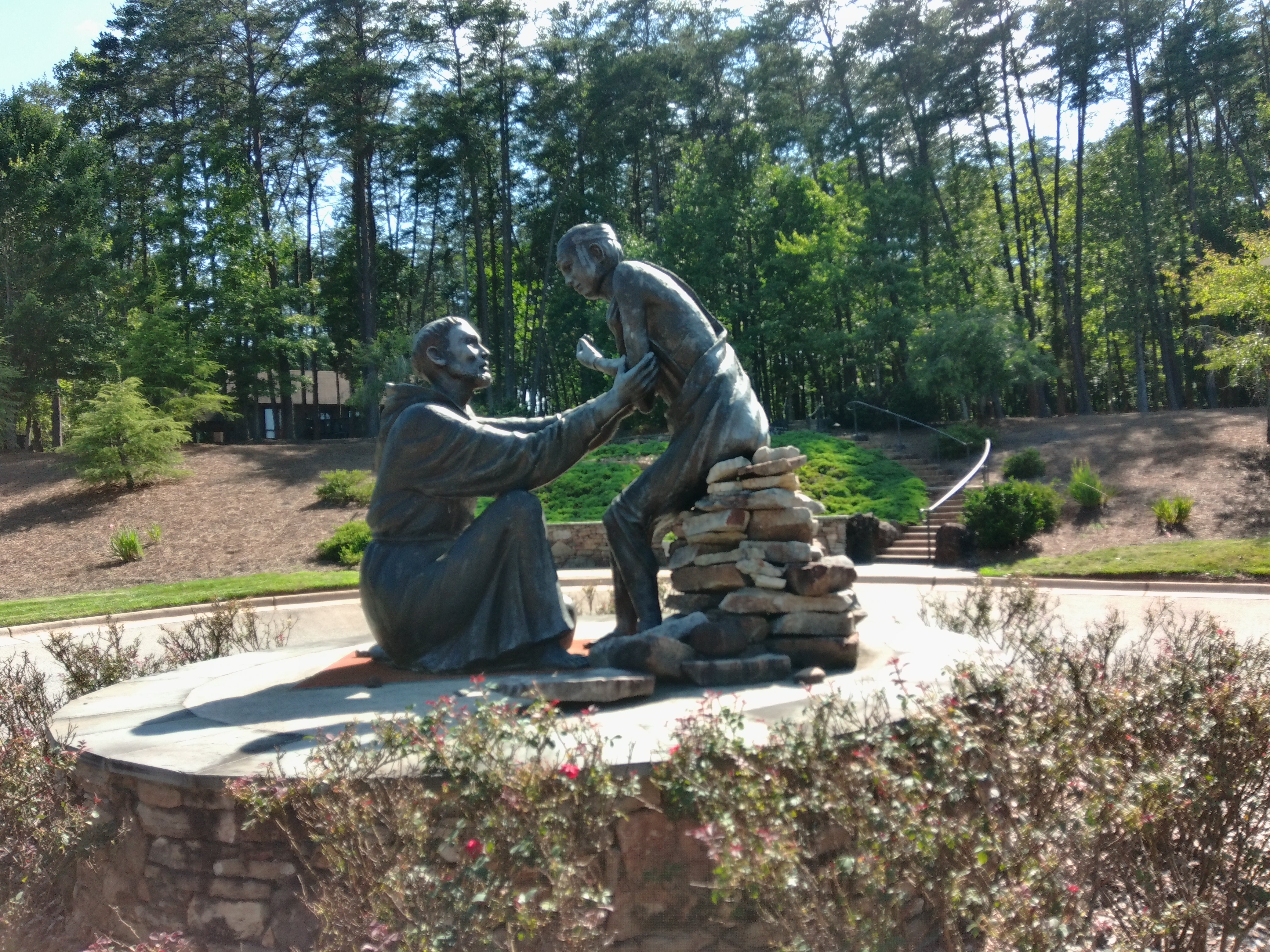



My first week on sabbatical brings Kristina and me to St. Francis Prayer Center in Stoneville, North Carolina. This is appropriate as I divest from ministry and my role as pastor, and seek the Lord on His terms. My prayers will no longer center on congregational leadership and the stewarding of ministry. They will center on my relationship with God. The setting is appropriate, however, because St. Francis of Assisi’s prayer in life was, “Who am I, O God; and who art Thou?”
One of my spiritual guides has been the late Henri Nouwen. Nouwen states that St. Francis’ prayer is intentionally two-fold because when we learn more about who we are, then we are forced to learn about who God is. In his words, when we ask, “Who is this God to whom I pray?”, it inevitably requires us to answer, “Who am I who wants to pray to the Lord?”* We are intimately bound with our Creator, and we inform one another.
Our Belovedness. The basis of our identity — whether we are in ministry or not — is being a child of God: “Being the beloved,” writes Nouwen, “expresses the core truth of our existence.” When we join Jesus on a journey inside the soul and heavenward towards the throne room of God, we begin where Jesus began, in his baptism, where God affirmed Him as God’s “Beloved Son.” Jesus did not get baptized because he was repenting of sin or needed cleansing. Jesus got baptized to stand in solidarity with us: God in Christ steps into our meaningful intersections of life no matter how vulnerable.
Nouwen notes that if Jesus got baptized in solidarity with us, then Jesus’ belovedness affirms our own belovedness.
The church teaches that in our baptism we are given the gift of the Holy Spirit, who binds us into the Son’s relationship with the Father. It is in baptism that we are welcomed into the covenant community and entrusted to the church for the spiritual guidance that nurtures us to claim our true created identity as the beloved of God” –Pritchett and Thompson, p. 11.
Kenosis. Jesus stands in solidarity with us in baptism. Nouwen teaches us that this baptism provides us the opportunity to stand in solidarity with him. The spiritual discipline on our part is the act of surrender, a process of emptying ourselves for the sake of Jesus. The Greek word is kenosis, found most prominently in Philippians 2:7, which states that Jesus “emptied himself, taking the form of a servant.” Paul writes, simply, “Let the same mind be in you that was in Christ Jesus” (Phil. 2:5).
In recognizing our belovedness in Christ and incarnating the act of emptying ourselves to Christ, we begin to understand what it means to be present with and to one other.
Our daily rhythm. It is mid-week here at St. Francis Prayer Center, and this push-and-pull between Belovedness and Kenosis has synchronized my spirit with the Holy Spirit and with Kristina. Our daily routine includes joining the St. Francis community in their shared time of prayer twice a day (8:35 AM and 8:35 PM), a hike following breakfast, writing and study until lunch (with a nap thrown in for good measure), prayer “on your own” during the day, then a shared time of prayer together, involving one of the features on campus, such as their labyrinth, and then a two-hour block of spiritual reading following dinner in the St. Francis library. Our time has been rejuvenating, inspiring, and challenging.
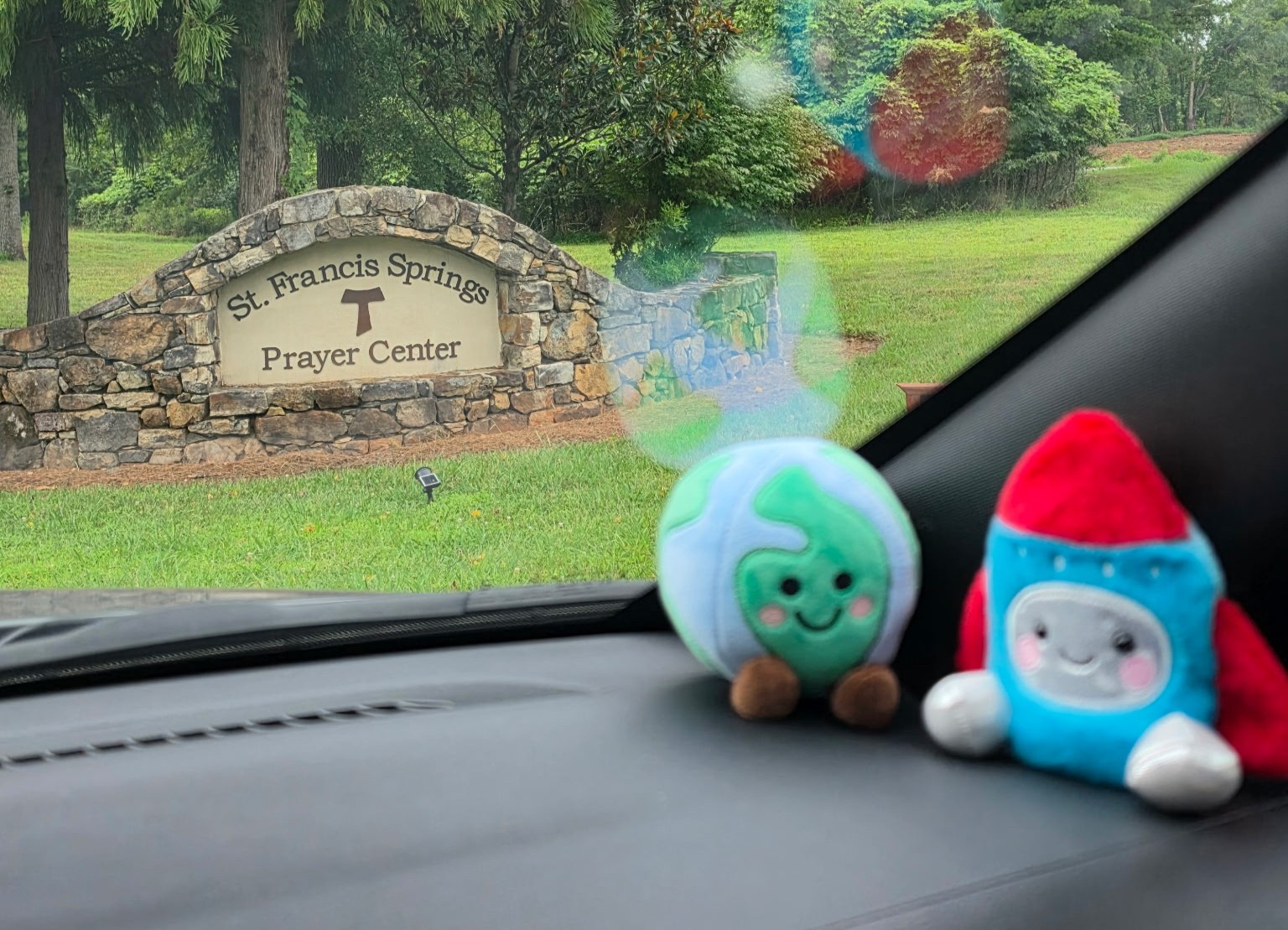
One final note: Just a reminder that our friend, Rocket, is making this pilgrimage with us. He met a new friend, Orbal Earthenbacher. You can find the most recent article by Rocket here. Please pray for Kristina, as she returns to First Baptist Church this Saturday, as I drive to my next destination in Virginia.
Source: Chris Pritchett and Marjorie Thompson, On Retreat with Henri Nouwen (New London CT: Twenty-Third Publications, 2021).


Leave a Reply