
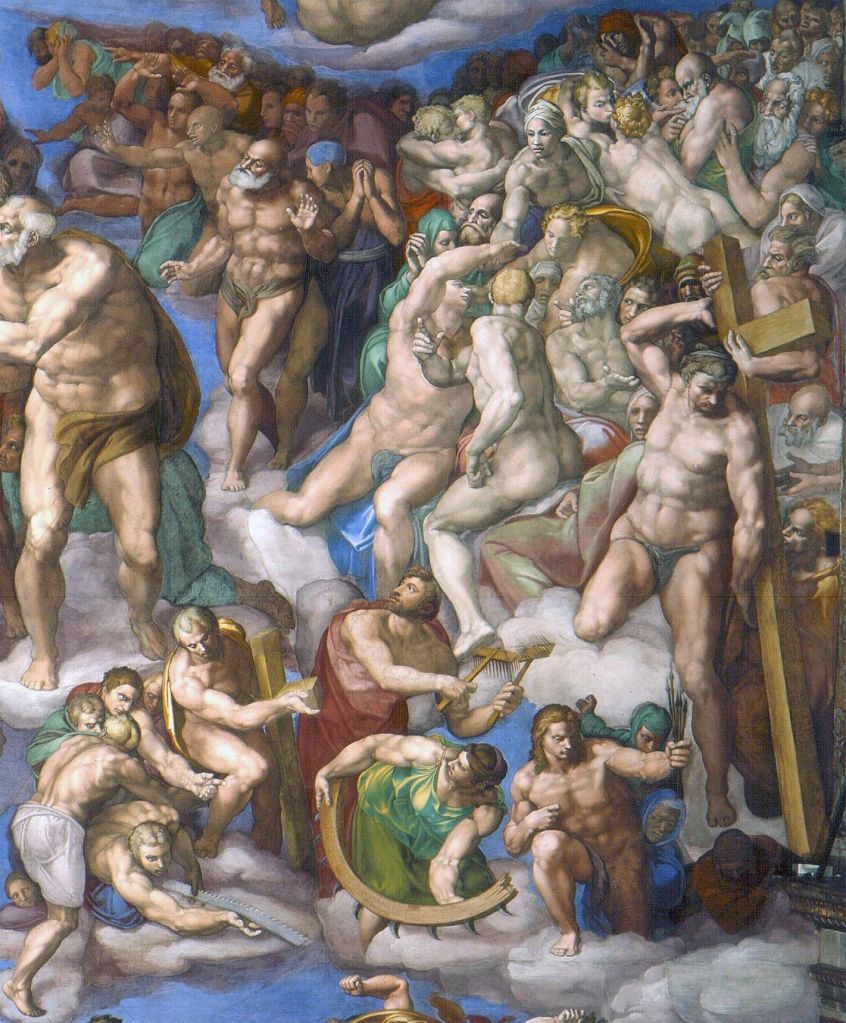
There is no better teacher of sinful nature than science. People often view science as optimistic, hopeful, visionary, progressive. That is not always the case, and science has not always led to the results that we all have hoped.
Ever since the scientific revolution, especially paired with the technological revolution in the twentieth century, humans have placed their bets on scientific discovery and progress. We have spent billions combating disease and seeking cures for cancer. Our very interventions delivering opioids to curb pain and illness have created a national crisis in which accidental drug overdose causes one-third of deaths among young and middle-age people. We have applied the best medical and technological advancements to promoting and sustaining life; yet, within the last decade, life expectancy has sharply declined, with the American Medical Association claiming, “This alarming trend is clearly not an anomaly and is primarily due to heart disease, cancer, COVID-19 and the ongoing drug-overdose epidemic.”
The unleashed power of the atom has changed everything save our modes of thinking and we thus drift toward unparalleled catastrophe ” – Albert Einstein
Advancements in weaponry have created deadlier wars at skyrocketing prices. The reality of venturing into outer space, even with simple aspirations of landing on the moon, continue to allude us despite the efficiency of privatizing space travel. Technology has not driven people to create a better, more creative and well-rounded society, but have thrust entire communities into high rates of loneliness, addiction, and suicide. Increased screen time and social media usage among young people have hindered critical thinking skills, leading prognosticators to wonder whether we, as a society, are in fact getting dumber.
And car tech? Don’t get me started. I ran a BMW built before the multitudinous sensor era for nearly a quarter million miles. A model one year later can’t make it out of the driveway without requiring a computer analyst to install a new car battery. I do enjoy the new adaptive cruise control on my newer model car, but its only a matter of time before that will break too.
What is glaringly obvious in all of this is that science can’t give a correction to one variable: Sinful Nature, that tried and true doctrine related to the sheer imperfection of humanity. Sinful nature assumes that, given a situation in which we are forced to make a choice, we will often make a choice that is more destructive. It assumes that people will act on self-preservation over sacrifice, which often puts others in harms way.
Science fiction author Andy Weir states, “Idyllic views of the future always seem to come with the hidden assumption that human nature will change. That somehow, the flaws of humankind will just melt away amongst the awesomeness of living among the stars. People will abandon mundane flaws like booze and drugs, and also everyone will be super-efficient like some kind of environmentalist’s dream. But that’s never been the case as we march forward, so I don’t see why it would happen in the future.”*
In my recent foray into science fiction as a result of my sabbatical studies, I have found that sinful nature (whether it is called that or not) plays a central role in many narratives that wrestle with “idyllic views of the future.” One of the most poignant depictions is found in the classic sci-fi book The Martian Chronicles by Ray Bradbury. The book follows in short-story form the evolution of man’s settlement on Mars. There, a highly intelligent, yet simple civilization of indigenous humanoids already resides. A rocket from Earth appears, and the first human comes in hopeful peace. Then more humans come in desperation, fleeing nuclear war and global fall-out on Earth.
Eventually, droves of humans arrive, leading to greater disease, conflict, and exploitation. Within a century, Mars ends up just like earth, a barren wasteland. The humans end up destroying not one planet, but two. And the entire indigenous civilization becomes extinct.
More recently, I’ve been captivated by the movie Don’t Look Up, staring Jennifer Lawrence, Leonardo DiCaprio, and Meryl Streep. The movie follows two scientists played by Lawrence and DiCaprio who discover a cataclysmic asteroid headed to earth. They warn the scientific community and government, but the President of the United States, played ever so brilliantly by Streep, denies that the asteroid will have any adverse effects. The government does not follow through on destroying the asteroid, but devises a plan to mine precious minerals from the asteroid This, all under the manipulative leadership of a tech billionaire who becomes the President’s primary advisor. The movie does not have a happy ending.
What is glaringly obvious in all of this is that science can’t give a correction to one variable: Sinful Nature, that tried and true doctrine related to the sheer imperfection of humanity.
As I search the stars and live into the wonder of God’s creation, I cannot let my head float among the clouds. There must always be an ongoing reflection in that, no matter the discovery or exploration, science will always hit dead ends regardless of our best attempts at progress. Some call it the law of entropy. Others call it Murphy’s Law (“Don’t let ‘im leave, Murph!”). I call it sinful nature.

This pessimism (and I’m not the only pessimist . . . er, realist . . . out there!) ought not lead us to resignation: “Oh, well!” but to serious consideration of what we value most. Values have the power to sustain us and provide a stubborn hope over time, but they must be values not entirely focused on self-preservation or progress. If science (and science fiction) can have any redemptive message, it must be that we are called to reach beyond ourselves. We just need to be sure we are betting not on science, but on the hope and love of God because only God can save us from ourselves.
*Source: Kelly and Zach Weinersmith, A City on Mars (New York: Penguin Press, 2023), p. 21.


 Baptist Spirituality
Leave a reply to Nick Tsai Cancel reply