
In one of the holiest places in Rockdale County–the crypt chapel at the Monastery of the Holy Spirit–hangs a lone icon of the Virgin Mary and baby Jesus. In the silence of that little room, these two striking figures give visitors a serene look filled with the quiet fortitude required for the Christian life.
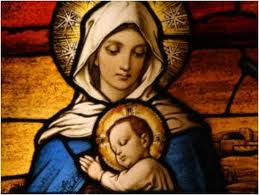 When I look in Mary’s face, I can only imagine what it was like for her the day the angel Gabriel told her that she would bear Israel’s Messiah (Luke 2:1-26). God chose Mary, favored among women, to continue God’s redemptive plan in the least expected of places, the backwoods village of Nazareth.
When we first meet Mary in Bible, she was betrothed to Joseph, a humble carpenter. More than likely, her days were filled with excitement surrounding wedding plans. Mary probably giggled with friends at the thought of sharing a home with someone; she had to pick what food to eat, what wedding dress to wear. Hers was an ordinary life, much like those of the other 13-year old girls in her neighborhood.
Those plans abruptly ended when a divine visit struck Mary with fear. She would, according to Gabriel, conceive the Son of God whose very name means “God will save.” Through her, the king of an everlasting kingdom would walk the earth, and she would experience God’s favor in a uniquely miraculous way.
Any other girl would run away, and even Mary had her doubts. The brief conversation with Gabriel included a question surrounding her apparent inability to fulfill God’s promise: “How can this be, since I am a virgin?” With God, Gabriel told her, all things are possible.
She did not shirk away from her responsibility. Nor did she let her fears or doubts hinder her from living into her purpose. This girl, barely a teenager, answered the angel with bold obedience: “Lord, I am your servant; do with me according to your word.”
Mary was so blessed, yet so fragile in this little Advent story. And though we do not have much information about her family background; we can clearly see that her life spoke volumes to God.
Mystery does surround Mary nonetheless. Many churchgoers have theorized how Mary lived out God’s purpose in her lifetime. By the year 400 CE, at least three theologians argued whether Mary conceived any more children after Jesus.
One theory held that the brothers of Jesus were half-brothers–Joseph’s sons from a previous marriage. Another theory held that Jesus’ brothers were not brothers at all, but cousins. A third concluded that Jesus did have blood brothers, and that Mary’s “immaculate conception” did not preclude her from having children after Jesus was born.
What catches my attention about Mary, though, is not the controversy of her place in the church; rather, it is how much she acts as a mirror for us all. When I visited the crypt chapel, I felt that I was a part of that parent-child relationship. Mary’s divine visitation was my divine visitation. God’s calling on Mary’s life was my calling as well. We are all called to bear God’s Light into a world of darkness and despair. We are all called to be Jesus’ brothers and sisters.
As I noted in my article last week, Advent is a time of anticipation when we enter the biblical story and await the birth of the messiah. It is pregnant with suspense and ends in the dramatic birth of light, love, and life in a manger. Mary reminds us that we are pregnant still, awaiting the Advent of Christ in our very spirit.
Like those who visit the womb that is the crypt chapel at our local monastery, we sit and wait and let that picture of Mary bring us strength and courage so that we, too, can hold the Christ-child come Christmas day.


 Baptist Spirituality
Leave a reply to Joe LaGuardia Cancel reply