
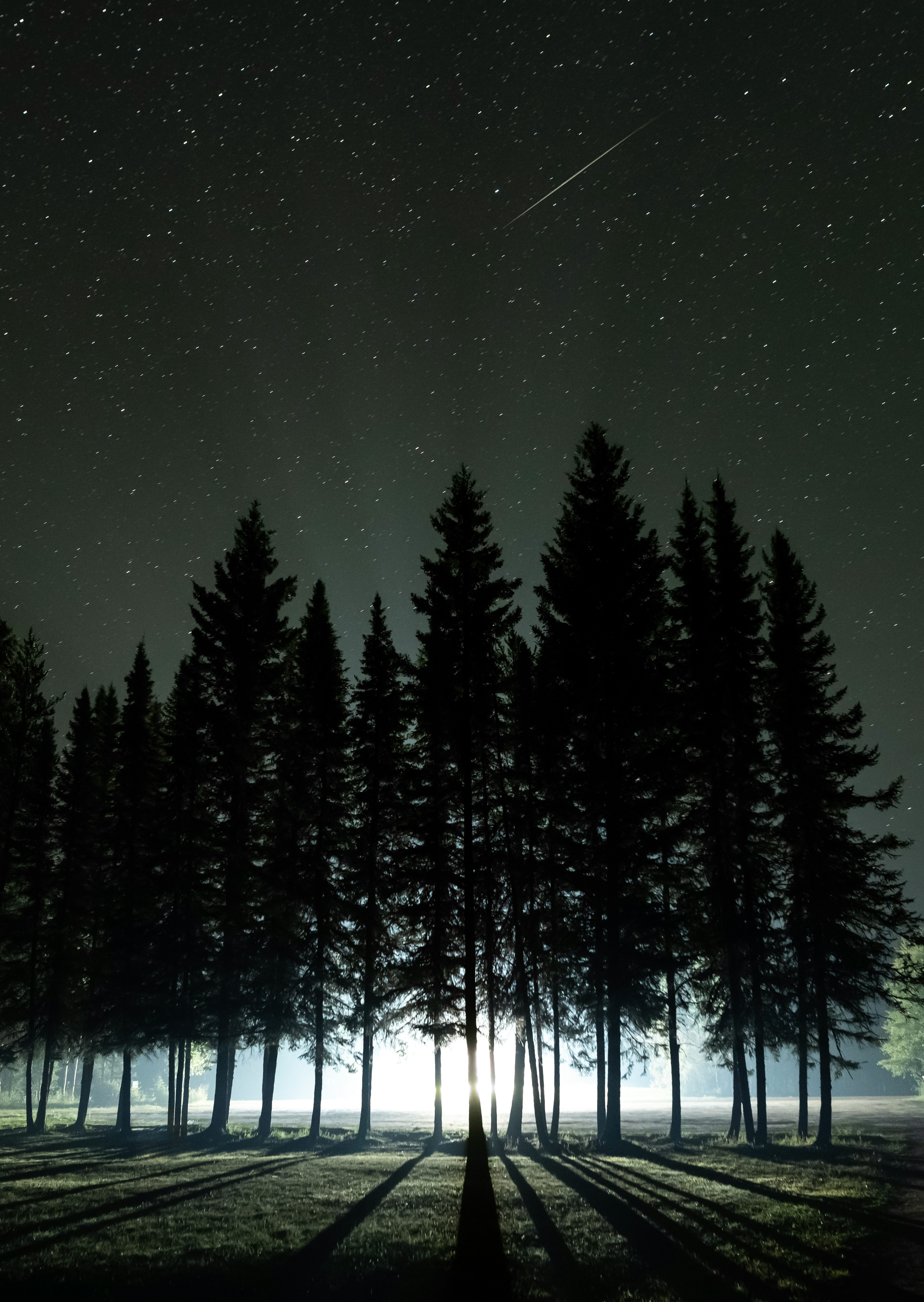
On a dusky morning of March 24, 2026, I was in my church office when I heard incredibly loud bangs. The first two scared me and, at first, I imagined cars falling off the top level of a nearby parking garage. A dozen cracks echoing off of nearby buildings followed confirming my second thought. These were no falling cars, but gunshots. And they were awfully close.
I hesitantly stepped out of my office, located on the back campus of the church, and looked up and down 15th Avenue. I listened for a moment. All quiet. No sirens. No other gunshots. I returned to my office.
Little did I know of what was unfolding on the front parking lot of the church, on 16th avenue. An enraged man had just executed his wife and her extramarital companion. When my own wife arrived at the church 30 minutes later to report for work, she noticed cop cars and yellow tape. We went out of the front door of the church to see two cars parked and a body surrounded by a half-dozen Sheriff’s cruisers.
As a gun violence victim myself, I was haunted by those gunshots the entire week. I found it hard to sleep. I was restless. I couldn’t focus on work or ministry. I cut out early and then cut out early again the next day. I couldn’t stop thinking about what unfolded: that someone would aim a gun at other people and intentionally take the lives of others. I couldn’t stop thinking that for every bang I heard a bullet was entering the life of human beings.
Life is precious, life is a gift. How dare anyone rob someone else — much less two someones — of their life.
Coincidentally this week, I am turning to some informal studies as I enter the next “phase” of my sabbatical reading, which explores the search and research of extraterrestrial life. Aliens and UFOs. . . (pardon me, “UAV”s) . . . have made the news recently, and Stephen Spielberg is coming out with a whopper of an alien movie this summer. Its a subject on everyone’s mind, but it is not necessarily a topic I am eager to explore. But what amateur astronomer isn’t begging the question as to whether life exists on other planets?
I am beginning my studies as I do all of my studies in cosmology — with a book from the used bookstore. Why spend all that money on new books when you can get at least one for less than $8.00?
The book, The Possibility of Life by journalist Jamie Green, asks not whether there is life on other plants, but asks what if there is life on other planets. One of her remarks in her introduction have brought me back to that fateful morning at the church. She noted that if we are the only living beings in the entire cosmos, then we are indeed small and very much alone. In her words,
For all that we imagine, Earth is the only planet we know of with life. It’s a terrible burden to contemplate, that this might be the only life in the cosmos. A huge responsibility for such a clumsy species to bear, and such a lonely universe to live in (Green, 19).
She is correct: If we are all that exists aside from God, then that is a terrible burden. We only have one goal: to believe in God our creator, have a relationship with God, and flourish as a human community. That’s the burden, but we treat our lives and our earth as if its all expendable.
There is a fear of the night that is begotten of ignorance and superstition, a nightmare fear, the fear of the impossible; and there is another fear of the night — of the starlit night — that comes with knowledge, when we see in its true proportion this little life of ours” (H. G. Wells, 1894 essay; quoted in Green, p. 36)
And if we continue uninterrupted, without bearing that responsibility no matter how clumsy, imagine if we were to go extinct. Extinction would leave a quiet, unremarkable cosmos with nothing to show for all its splendor.
We are a fairly nubile species in the universe — God waited for the sixth day for a reason, I suppose — and so far, we’ve proven to be both clumsy and efficiently self-destructive. As long as people go around shooting wayward lovers, then we are not too far off.
Most of the Christians I know, the fundamentalist ones at least, do not believe that there is any life beyond our own. If God created us and Jesus saves us, then this is all there is. Aliens, according to their worldview, are merely demons in disguise. But if that’s the case, then Christians should not even begin to politicize or weaponize climate conservation, gun control (and the right to bear nukes, if you can believe that!), and business regulations. We should be the first to give the clarion call that, if this is all there is, then God has just stepped up our responsibility.
The burden is ours to bear. Those fundamentalists, which are so readily apt to favor guns, God, and deregulation, ought to be the first to change their tune. If this is all we have, then this is what we need to care for, leaving all our political and religious labels at the door.
Source:
Jamie Green, The Possibility of Life (Toronto: Hanover Square, 2023).

 Baptist Spirituality
Leave a comment