
I told my wife that we were finally going to cultivate a beautiful garden this year . She looked at me skeptically: Were we really going to spend the money to have a nice yard? Were we going to invest time tending the soil, planting seeds, and making a brick path?
No, none of that. I told her it was going to be a special, indigenous garden, a garden that welcomes all that God brings to our land without the help of newfangled agricultural intervention.
It’s been about three months now, and I can honestly say that the weeds are growing in quite nicely thank you very much.
I guess I just have a soft-spot for weeds. One of my personal core values is, after all, a strong insistence on biblical hospitality that welcomes even the unwieldiest plant.
You can have the beautiful flowers; my weeds and I are doing just fine. Honestly, I can’t tell the difference anyway. They are all green to me, and the wild flowers are just as pretty and attract just as many bees.
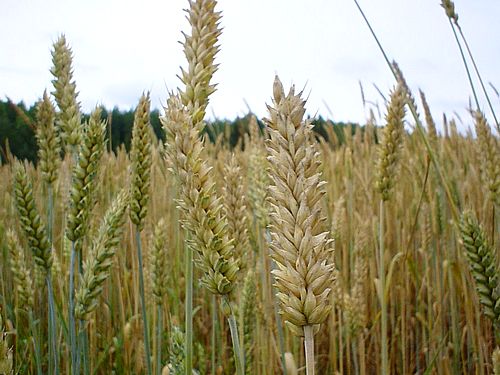
In Matthew 13:24-30, Jesus says that the kingdom of heaven is like a field of wheat that gets overrun with weeds that an enemy sows in the middle of the night. When the wheat and weeds grow together, the servants cannot separate the two until harvest time. Only then will the wheat be stored in the barn and the weeds make wonderful kindling.
Later, Jesus explains to the disciples that this is a parable of God’s judgment. The wheat and weeds represent the children of God and the children of the Evil One, respectively. The field is the world in which the two co-mingle.
This recalls John the Baptist’s own oracle of judgment: “God’s messiah will baptize you with the Holy Spirit and with fire. His winnowing fork is in his hand, and he will clear his threshing floor and will gather his wheat into his granary; but the chaff he will burn with unquenchable fire” (Matt. 3:11-12).
I have heard many a preacher describe wanton sinners among us as weeds–You know: the folks who lie, cheat, steal, fornicate, and gossip (well, maybe not gossip). I have also heard many a preacher advocate for “church discipline” to separate the weeds from the wheat in public fashion. We think we know who those weeds are!
Yet, if we read the text closely, we find that the wheat and the weeds look very much the same. At least one type of weed in the ancient world, darnel, looked like wheat. If a farmer wanted to sabotage his neighbor’s field, what would be more lethal than a subtle facsimile planted at night?
I’m not convinced that Jesus is talking about those blatant sinners among us when he is referring to weeds in this parable. More likely, he is referring to those religious people who fail to see their righteousness as God’s gift rather than the product of their own design.
If I remember correctly, Jesus had harsher words to say to the Pharisees than to the tax collectors and sinners with whom he spent time. And you remember what happened to that one preacher who prayed at the temple, “Thank you, Lord, for not making me like that weed over there!”
The weeds and wheat teach us that it really isn’t our business to judge in the first place. Episcopal priest, Barbara Brown Taylor, once wrote that, “Judgement is above all about being known…all the way down. It is about being seen through, seen into, and known for who we really are. It is about the total failure of our defenses and the abject poverty of our pretensions.”


 Baptist Spirituality
Leave a comment